

Please fill out the form below to request a quote or to request more information about us. please be as detailed as possible in your message, and we will get back to you as soon as possible with a response. we're ready to start working on your new project, contact us now to get started.
Manufacturer's Guide to Air Cooled Industrial Chillers
2026-02-12
TEYU Chiller, S&A Chiller
33
Air-cooled industrial chillers are specialized equipment designed to remove heat from processes or applications, maintaining a consistent and controlled temperature. These chillers play a crucial role in a variety of industrial settings by ensuring optimal operating conditions for processes that require precise temperature management. Whether in manufacturing, pharmaceuticals, or food processing, air-cooled industrial chillers provide reliable cooling solutions that enhance productivity and efficiency.
Understanding the Components and How They Work
Air-cooled industrial chillers are composed of several key components that work in harmony to achieve their cooling objectives. Lets delve into each:
- Compressor: The heart of the chiller, the compressor draws in refrigerant, compresses it, and discharges it at a higher pressure and temperature. This is the primary mechanism that drives the cooling process.
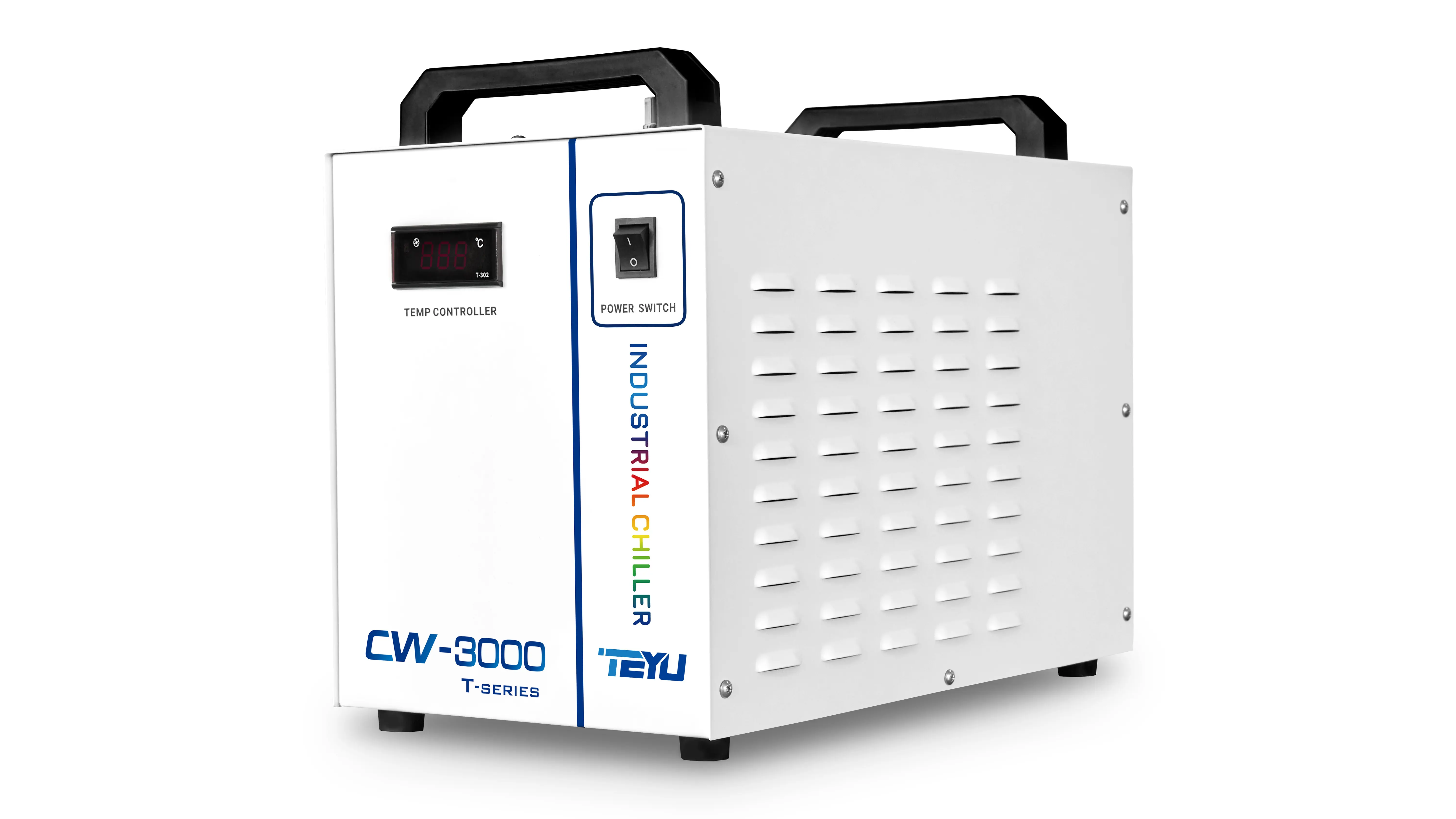
Condenser: As the high-pressure refrigerant leaves the compressor, it is directed to the condenser. Here, the refrigerant releases its heat to the air, which is then dispersed by fans, making the refrigerant return to a liquid state.
Evaporator: The evaporator is where the cooling magic happens. As the liquid refrigerant passes through the evaporator, it absorbs heat from the process or fluid being cooled. The refrigerant then returns to a gaseous state, completing the cycle.
Control System: The control system manages the entire operation, ensuring that the chiller runs efficiently and responds to changes in temperature demand. It monitors and adjusts the cooling process to maintain the desired temperature.
The refrigerant circulates through the system, transforming between gas and liquid states to absorb and release heat. This continuous cycle results in the efficient removal of heat from the process, ensuring that it remains at the optimal temperature.
Key Benefits of Using Air-Cooled Industrial Chillers
Air-cooled industrial chillers offer several advantages that make them a preferred choice in many industrial settings:
- Cost-Effectiveness: Compared to other types of chillers, air-cooled chillers are often more economical. They require less upfront investment and have lower operating costs, making them a smart choice for businesses looking to cut expenses.
Maintenance and Operational Simplicity: These chillers are designed with user-friendly features that simplify maintenance. Regular cleaning and inspections can help prevent issues before they become major problems, reducing downtime and maintenance costs.
Energy Efficiency and Environmental Impact: Modern air-cooled industrial chillers are highly energy-efficient, thanks to advancements in technology. They consume less energy, reducing utility bills and contributing to a lower carbon footprint.
Applications and Industries Suitable for Air-Cooled Industrial Chillers
Air-cooled industrial chillers find wide-ranging applications in various industries that require precise temperature control:
- Food Processing: In the food industry, these chillers are used to maintain the quality and freshness of products during processing, storage, and transportation.
Pharmaceuticals: In this industry, the temperature control is critical for maintaining the efficacy and safety of pharmaceuticals. Chillers help ensure that products are stored and processed at the correct temperature.
Automotive: In automotive manufacturing, accurate temperature control is essential for ensuring the proper curing of paints and adhesives. Chillers help maintain the consistency of the curing process.
Other Industries: Air-cooled industrial chillers are also used in industries such as laser cutting, electronics manufacturing, and semiconductor fabrication, where maintaining a consistent temperature is paramount.
Factors to Consider When Selecting an Air-Cooled Industrial Chiller
When choosing an air-cooled industrial chiller, several key factors should be taken into consideration:
- Cooling Capacity: The chiller must be capable of handling the heat load generated by the process. This is typically measured in kW or BTUs.
Temperature Range: The temperature range the chiller can maintain is critical. Ensure the chiller can achieve and maintain the required temperature for your specific application.
Energy Consumption: Energy efficiency is crucial, especially for long-term cost savings. Look for chillers with high SEER (Seasonal Energy Efficiency Ratio) ratings.
Reliability and Durability: Choose a chiller from a reputable manufacturer known for producing reliable, durable equipment. This will ensure minimal downtime and better performance over time.
Installation and Maintenance Guidelines
Proper installation and regular maintenance are essential for ensuring the longevity and efficiency of air-cooled industrial chillers:
- Installation Best Practices: Ensure that the chiller is installed in a well-ventilated area with adequate space for air circulation. Make sure to follow the manufacturers guidelines for proper installation to avoid issues like overheating or poor performance.
Regular Maintenance Tasks: Schedule regular maintenance checks to clean the condenser coils, check refrigerant levels, and inspect the control system. Routine maintenance can help identify potential issues early and prevent costly breakdowns.
Recommended Frequency: Maintenance tasks should be performed at least twice a year, with more frequent checks if the chiller is operating in a demanding environment.
Troubleshooting and Common Issues
Excessive Noise: This can be due to loose parts or dirty condenser coils. Clean the coils and tighten any loose components.
Inadequate Cooling: Check the refrigerant levels and ensure that the compressor and condenser fans are functioning correctly.
Temperature Fluctuations: This could indicate a problem with the control system. Check the settings and consider consulting a professional if the issue persists.
Tripped Breakers: This usually indicates an overload or a malfunction. Check the load and ensure that the chiller is properly grounded.
Conclusion
By understanding the fundamentals of air-cooled industrial chillers and following best practices for selection, installation, and maintenance, manufacturers can ensure that their equipment operates efficiently and reliably. Whether in food processing, pharmaceuticals, automotive, or other industries, these chillers are a valuable investment that can contribute significantly to operational success.
Table of Contents
GET IN TOUCH WITH Us
recommended articles
TEYU CW Series industrial chillers deliver stable cooling from 500W to 45kW for laser systems, CNC spindles, molding, UV printing, and industrial equipment.
S&A water cooling system CW-6000 for metal fiber laser cutting machine
S&A Water Chiller Unit CW-6100 for Cooling High Precision Slot Milling Machine
What is the size of S&A Teyu high power air cooled industrial chiller CWFL-6000?
There are quite a few UV laser manufacturers in our country,including Huaray,Bellin,Inngu,RFH,Inno,Gain Laser,Grace Laser,Meiman Laser,etc..
Why Advertising Production Professionals are So Fascinated by Printech? Will Air Cooled Industrial Chiller Show Up There?
What is FESPA? Why Would Air Cooled Industrial Chiller be Popular in this Expo?
Laser cleaning machine has been increasingly used to remove the rust from the metal.
Mr. Lee from Taiwan is one of our new clients and he purchased a few air cooled industrial chillers CW-6200 to cool his multinational metal laser drilling machines in the beginning of this year.
He was quite impressed by the efficiency and said that he was quite looking forward to see the working performance of the air cooled industrial chiller CWFL-1000.
no data
Copyright © 2026 TEYU S&A Chiller | Sitemap Privacy policy